How to Visit the Rome Catacombs
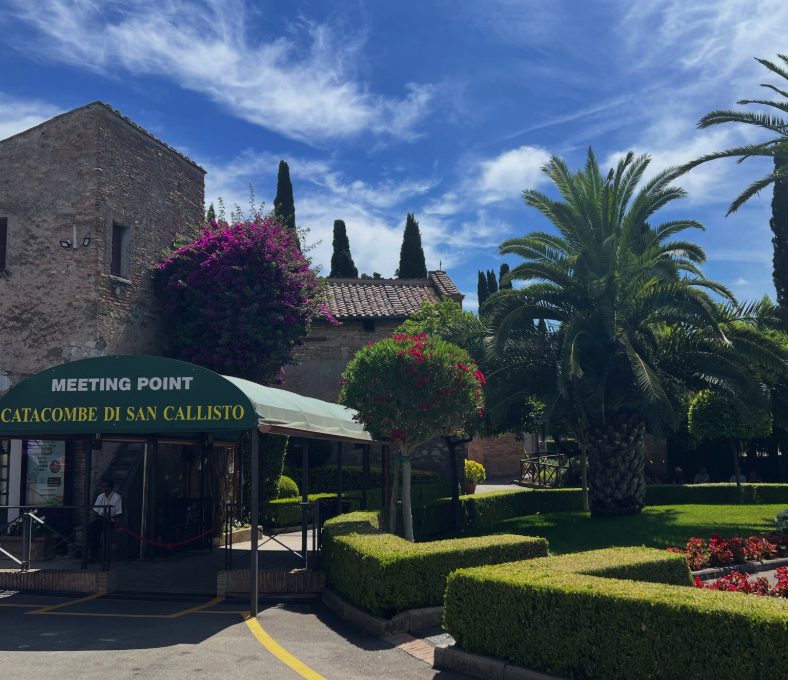
The catacombs are the one major Roman sight that most visitors get wrong before they arrive. Not because they are hard to reach, but because almost everything about them works differently from the Colosseum: you cannot wander, you cannot photograph, the site you want may be shut, and the thing you are picturing is probably somewhere else entirely. This guide covers all of it.
Where the catacombs are, and why they are out there
Every Roman cemetery lies outside the city walls, because the law said so. The prohibition runs back to the Twelve Tables in the fifth century BC and applied to everyone. So the burial grounds line the consular roads out of town, and the greatest concentration is along the Appian Way, four or five kilometres south of the centre.
That single fact shapes the whole visit. There is no walking to the catacombs from the Forum, no combining them with a morning at the Pantheon without a journey in between, and no chance of stumbling on them. The full story of why is on the history of the Rome Catacombs.
What it costs
Three of the four sites most visitors consider are run by the Pontifical Commission for Sacred Archaeology and share one tariff. The Capuchin Crypt on Via Veneto is a separate foundation.
| Site | Full | Reduced | Free under |
|---|---|---|---|
| San Callisto | €10 | €7 | 7 |
| Domitilla | €10 | €7 | 6 |
| Priscilla | €10 (+€2 online) | €7 | 6 |
| Capuchin Crypt | €10 | €6.50 | 7 |
Reduced covers ages 7 to 16, school groups, students of archaeology, architecture and art history up to 25, and clergy, all with proof at the desk. The full breakdown sits on visiting the Rome Catacombs.
Every visit is guided — the rule that changes your plan
There is no self-guided route into any catacomb open to the public. No audio-only ticket, no map, no wandering. You go down with a member of staff or a licensed guide, in a group, at a fixed time. San Callisto will not run a visit for fewer than two people at all.
This catches solo travellers out more than anything else. Arriving alone at a quiet hour can mean waiting for a group to form. Booking a departure with a time on it removes the problem entirely, and it is the practical argument for a tour over a door ticket.
Pick your day before you pick your site
The sites close on different weekdays on purpose, so that something is always open. Read the pattern the other way round and a lot of confusing tour copy suddenly makes sense.
- Monday: San Callisto and Domitilla open, Priscilla closed.
- Tuesday: San Callisto and Priscilla open, Domitilla closed.
- Wednesday: Domitilla and Priscilla open, San Callisto closed.
- Thursday to Sunday: all three open.
The Capuchin Crypt is open every day. All of the sites also break from around noon until 14:00, and each takes an annual maintenance closure of about a month — San Callisto's falls from mid-January, Priscilla's in the second half of August. Which site suits you is the subject of our guide to choosing between them.
Getting there
Bus 118 leaves from Circo Massimo and passes the Colosseum, running down the Appian Way to the San Callisto and San Sebastiano stops. It is cheap, it is direct, and in summer it is full. Domitilla is the odd one out: closer to Garbatella on Metro line B, then ten minutes on foot. Priscilla sits north on Via Salaria and is reached by bus from Termini.
Driving is legal and rarely worth it. The old road is narrow, partly closed to traffic, and signed for people who already know where they are going. Almost every departure among the Rome Catacombs tours includes a private transfer, and on this attraction that transfer is most of what the price buys.
What to wear, and what to leave behind
Knees and shoulders covered, at every site, checked at the door, for men and women alike. Operators are blunt about it because they lose people to it every summer. A scarf or a light shirt in your bag solves it and doubles as the layer you will want below ground, where it holds 15 to 16 °C all year.
Leave the camera in your bag. Photography is banned inside all of the sites, and there is no phone signal under several storeys of tufa. Wear flat shoes: the steps are worn and the floor is uneven in places. More on all of this in what to expect underground.
How long to allow
Below ground, a visit runs 30 minutes to two hours depending on the site and the departure. Add the journey each way and the shortest realistic plan is about two and a half hours door to door. A trip pairing a catacomb with the Capuchin Crypt runs three to four hours; the e-bike day along the Appian Way runs six.
If time underground is what you want rather than a circuit of stops, the two-hour Domitilla walks give the most of it. You can compare Rome Catacombs tours on exactly that before you choose.
Three ways to book, and when each is right
- Direct with the site. €10, booked on the catacomb's own page. Right if you are already out on the Appian Way with a free morning and no fixed language preference.
- At the desk. Fine in November, a gamble in July. Groups leave every half hour with a cap, so you may wait for the second or third.
- A guided departure. From $55, including the transfer, an English guide and a reserved slot. Right if you are coming from the centre, on a schedule, or want the commentary in your own language.
All the departures listed on Rome Catacombs Tours refund in full up to 24 hours ahead, with two clearly marked exceptions. The FAQs cover the booking questions that come up most.
The mistakes worth avoiding
Arriving on the wrong day is the big one, and it is entirely avoidable. After that: turning up in shorts, planning to photograph it, expecting bones, and leaving no margin between the noon closure and the 14:00 reopening. None of these ruins a trip, and all of them are easier to fix before you leave the hotel than at the gate.
Get those five things right and the catacombs are one of the most memorable hours in Rome — cool, quiet, and completely unlike everything else on the itinerary. If you would rather be collected from your hotel and skip the buses entirely, a private tour Catacombs Rome does the whole thing door to door.